
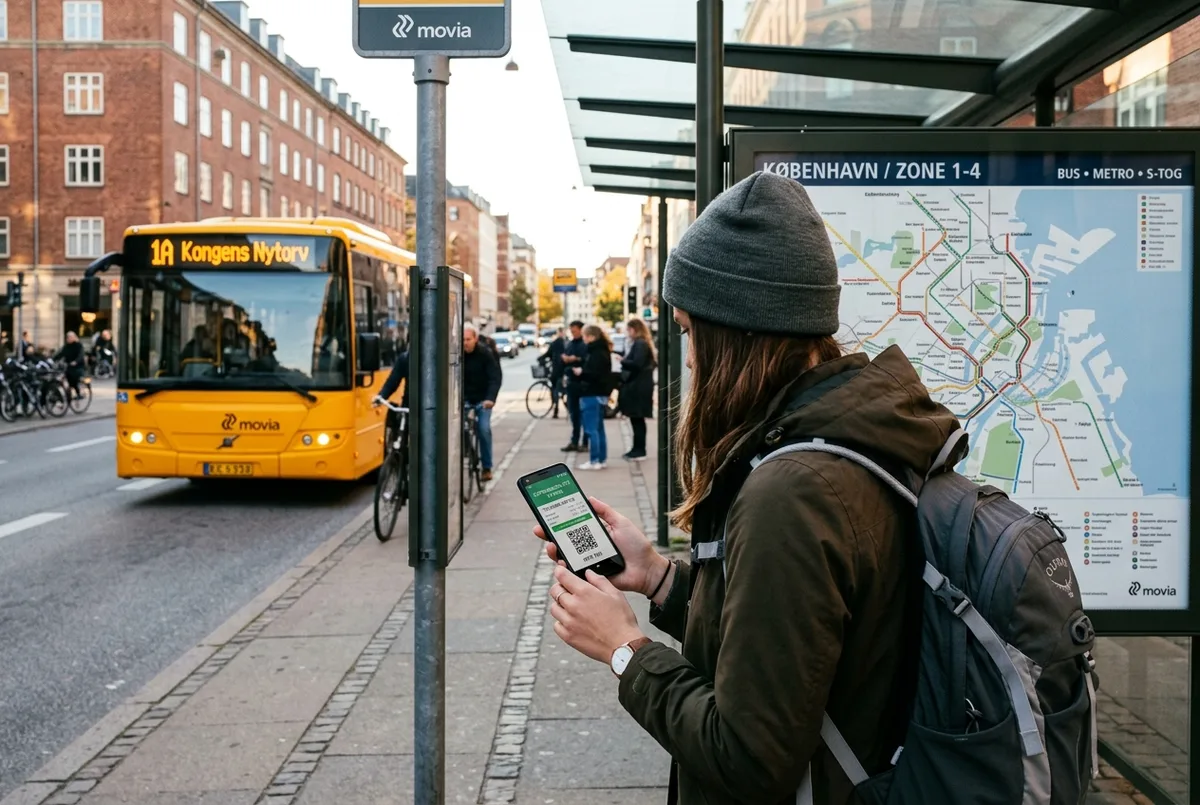
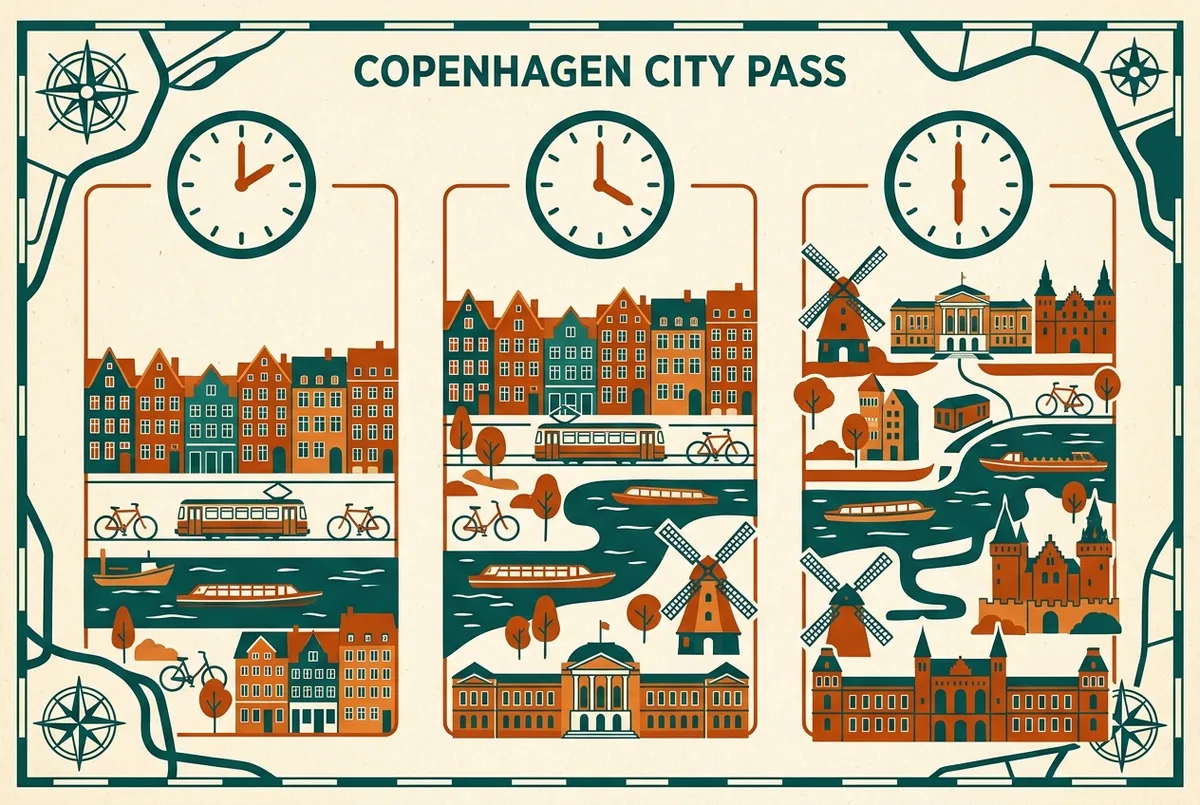
The copenhagen city pass 72 hours tier suits a longer city break, while the 24 and 48 hour options fit a single day or a weekend of unlimited metro, bus and train travel. Every duration works exactly the same way once activated: unlimited rides within your chosen zone until the clock runs out. This guide matches trip length to the right duration so you are not paying for hours you will never use.
Copenhagen City Pass Durations: 24, 48 & 72 Hours
Quick answer
Pick 24 hours for a single day of transport, 48 hours for a weekend, and 72 hours for a longer city break. The copenhagen city pass 72 hours tier costs more in total than the shorter options but less per day.
Check availability ✓ Free cancellation available · From 79 EUR
Contents
- How Many Hours Should You Buy for the Copenhagen City Pass?
- Is the 24 Hour City Pass Worth It?
- Is the 48 Hour City Pass Worth It?
- Is the 72 Hour City Pass Worth It?
- Copenhagen City Pass Duration Price Shape
- Does Duration Affect Zone Coverage?
- How Does Duration Interact With Size?
- When Does the Clock Start on Your City Pass?
Ready to visit?
Book your tickets in advance: popular time slots sell out.
Check availability · From79EUR →✓ Free cancellation available · Secure booking
How Many Hours Should You Buy for the Copenhagen City Pass?
Match the duration to your actual number of active travel days, not your total trip length. A five day trip with two rest days spent mostly on foot still only needs a duration covering the days you will actually be riding transport repeatedly, since a City Pass adds nothing on a day you barely leave your neighborhood.
Is the 24 Hour City Pass Worth It?
Yes, for a single busy day of moving around the city by metro, bus or train. The copenhagen city pass 24 hours tier suits a layover, a one-day stop, or any single day where you expect to make several separate trips rather than staying in one neighborhood. If you are only making one or two rides the whole day, a single ticket may cost less than the pass.
Is the 48 Hour City Pass Worth It?
The 48 hour tier fits a standard weekend visit, giving you two full days of unlimited transport without needing to track individual fares. The copenhagen city pass 48 hours price sits above the 24 hour tier in total but works out cheaper per day, which is the standard shape of every multi-day transport pass.
Is the 72 Hour City Pass Worth It?
Yes, for a longer city break spanning three active travel days. The copenhagen 72 hour city pass carries the lowest per-day cost of the three main tiers, so it earns back its higher total price fastest when you are genuinely riding transport multiple times a day across all three days rather than spending one of them on a single museum visit within walking distance of your hotel.
Copenhagen City Pass Duration Price Shape
| Duration | Typical use case | Price shape |
|---|---|---|
| 24 hours | One busy transport day | Lowest total, highest cost per day |
| 48 hours | Standard weekend | Mid total, mid cost per day |
| 72 hours | Longer city break | Highest total, lowest cost per day |
Exact figures move with DOT’s own fare updates, so confirm the current price for your chosen size and duration through an authorized seller before buying rather than relying on a number quoted elsewhere.
Does Duration Affect Zone Coverage?
No. Whether you buy 24, 48 or 72 hours, the zones included stay identical for whichever size, Small or Large, you chose. Duration only changes how many hours you have to use that same zone coverage, not which stations and stops fall inside it. Our City Pass Small vs Large guide covers what each size actually unlocks.
How Does Duration Interact With Size?
Duration and size are two separate decisions that combine to set your final price. A 24 hour Small pass and a 72 hour Large pass sit at opposite ends of both scales, so pick each independently: size based on where your trip actually goes, duration based on how many active travel days you have. Our transport coverage guide confirms exactly which network each size reaches.
Denmark’s underlying Rejsekort ticketing system uses a similar shape, longer validity windows costing less per day, across most of its own transport products.
When Does the Clock Start on Your City Pass?
The validity window generally starts the moment you first activate or tap the pass, not the moment you purchase it. That means buying in advance and activating on the day you actually start riding gets you the most value from every paid hour, rather than losing time to a travel day spent mostly at the airport or unpacking at your hotel.
How Do You Decide Between Two Neighboring Durations?
If your active travel days clearly fit inside the shorter tier with room to spare, buy the shorter one. If you are already stretching to fit your planned trips into that window, the next tier up almost always earns back its extra cost through one more day of unlimited rides rather than paying for individual tickets instead.
Does a Longer City Pass Ever Beat the Copenhagen Card on Value?
Rarely, once attractions enter the picture. A longer City Pass still only covers transport, so a multi-day trip that also includes museums or Tivoli’s grounds usually favors the Copenhagen Card once you add up what those attraction tickets would cost separately. Our Copenhagen Card durations guide walks through the equivalent duration decision for the attraction-and-transport bundle.
Does a Longer Duration Ever Cost More Per Day Than a Shorter One?
No, not under the standard pricing shape. Every multi-day tier is built to cost less per day than the one below it, which is the entire incentive for buying a longer duration in the first place. If you ever see a longer tier priced at a higher rate per day than a shorter one, treat that as a sign the figure is outdated rather than a genuine pricing quirk, and confirm the current chart before buying.
What If Your Trip Falls Between Two Durations?
Round up rather than down. A trip with two and a half active travel days fits more comfortably under the 72 hour tier than trying to stretch a 48 hour pass across a third day of rides, since running out of validity mid-afternoon on your last day means paying for individual tickets anyway, often at a worse rate than the pass would have cost. The one exception is a trip where that half day involves very little transport, in which case the shorter tier plus one or two single tickets can still work out cheaper.
Should You Buy the City Pass Duration Before or After Booking Flights?
After, ideally, once your actual arrival and departure times are confirmed. Knowing exactly when you land and when you need to be back at the airport lets you count active travel days accurately instead of guessing, which matters most at the edges, for example a late-night arrival that barely counts as a first travel day at all.
Does Your Duration Choice Depend on Your Itinerary Style?
Yes. A trip built around a few fixed neighborhoods with lots of walking between stops needs far fewer transport rides than one that bounces across the city multiple times a day, even across the same number of calendar days. Two travelers on identical five-day trips can reasonably land on different durations once one plans a walking-heavy itinerary and the other plans several across-town museum visits daily. Think in terms of transport rides per day, not just days on the calendar, when picking between 24, 48 and 72 hours.
What’s the Safest Duration If You’re Unsure?
When genuinely torn between two neighboring tiers, sizing up is usually the safer error. Running out of validity partway through your last sightseeing day and needing to buy individual tickets at a worse rate costs more, in both money and hassle, than having a few unused hours left on a slightly longer pass. This is the same logic that applies to picking a Copenhagen Card duration, and it holds just as well for the City Pass.
Does the Purchase Process Change Between Durations?
No. Every duration, from 24 to 72 hours, goes through the same purchase and activation flow, whether bought online in advance or at a ticket machine on arrival. The only variable is which duration you select before checkout, so there is no added friction to buying a longer tier beyond the higher upfront price.
Can You Buy Two Shorter Passes Instead of One Longer Duration?
Technically yes, though it rarely saves money. Buying two 24 hour passes back to back to cover a 48 hour trip almost always costs more in total than buying the 48 hour tier directly, since the per-day rate drops as duration increases rather than staying flat. The only scenario where stacking shorter passes makes sense is a trip with a long gap in the middle, for example two separate days of heavy transport use split by a quiet day spent entirely on foot, where paying for the middle day’s validity would otherwise go to waste.
Where Should You Go Next After Choosing a Duration?
Once you have a duration in mind, start from the full City Pass guide if you have not already settled on a zone size, since size and duration are two separate decisions that combine to set your final price. For every other Copenhagen ticket option compared side by side, see our Copenhagen Card and City Pass overview.
Frequently Asked Questions
How long is the Copenhagen City Pass 72 hours valid for? 72 hours from activation, covering unlimited metro, bus and train rides within your chosen zone for that full window.
Is 48 hours enough for a weekend in Copenhagen? Yes, for most standard weekend trips involving repeated transport use across two days.
Does the City Pass duration change what zones I can travel in? No. Duration only changes how many hours you have; zone coverage depends entirely on which size, Small or Large, you buy.
Can I extend a City Pass if my trip runs longer than planned? No. Each pass is a fixed duration once activated. Buying the next tier up in advance is safer if your trip might stretch.
Is the 72 hour City Pass better value than three 24 hour passes? Almost always, since multi-day tiers are priced at a lower rate per day than stacking single-day purchases.
Ready to visit?
Book your tickets in advance: popular time slots sell out.
Check availability · From79EUR →✓ Free cancellation available · Secure booking