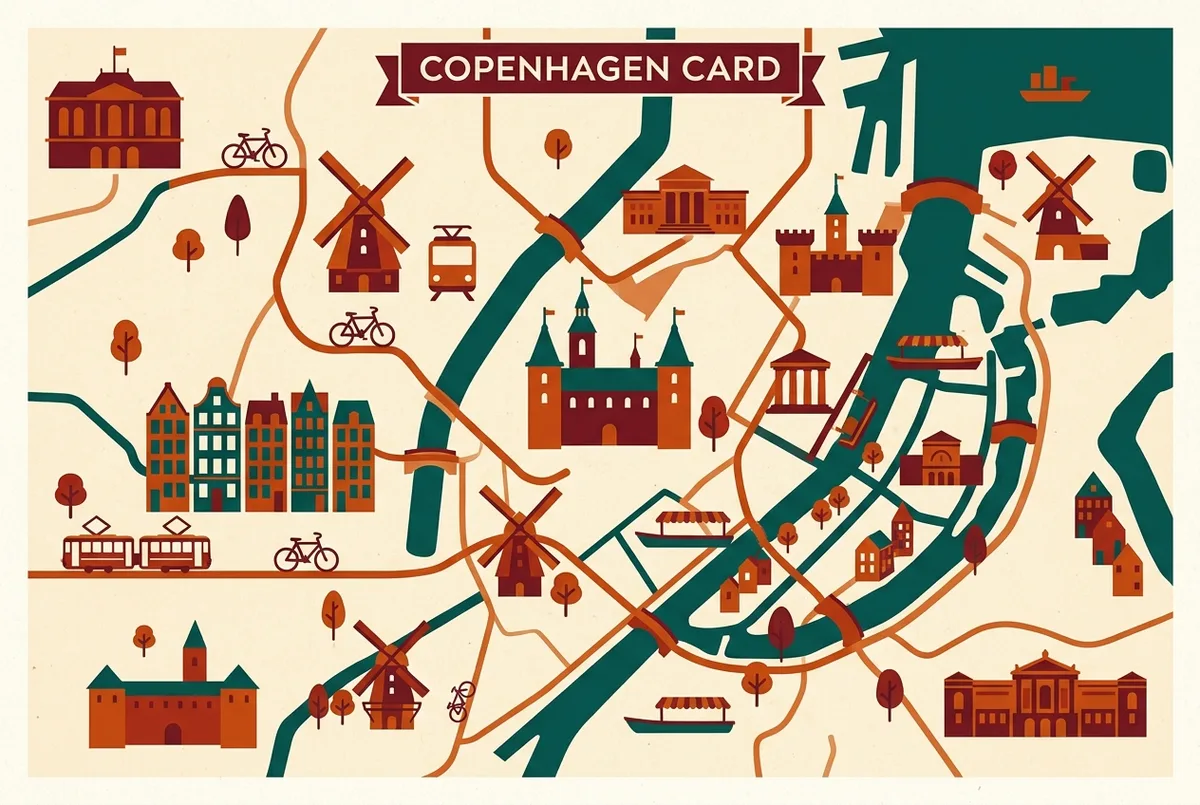
The Copenhagen Card is a single digital pass that opens the door to more than 80 museums, castles, and attractions across the Danish capital, plus free public transport, all for one flat price. Instead of queuing at each ticket desk and adding up separate fares, you buy the card once, activate it in an app, and use it for a set window of time. Two current versions exist, one built around public transport and one built around a hop-on hop-off bus, so the right choice depends on how you like to move around a city. This guide breaks down what the Copenhagen Card actually costs, what it covers, whether it’s worth buying, and how it stacks up against the standalone attraction tickets and transport passes you’d otherwise have to juggle.
The Copenhagen Card is an official sightseeing pass issued for visitors to Copenhagen, covering entry to dozens of museums and landmarks in one purchase. It’s built for people who want to see a lot of the city without buying a ticket at every door.
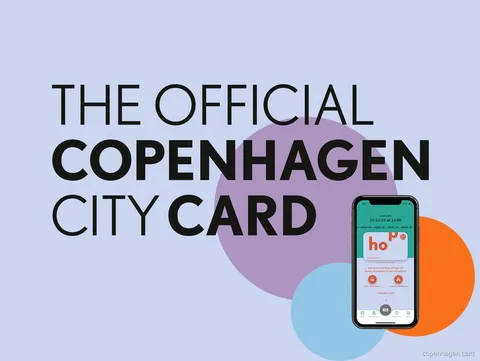
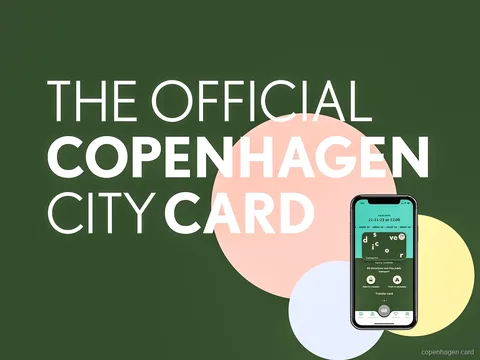
The card lives entirely in a smartphone app. After you buy it online, you get an eight character code that you redeem and activate whenever you’re ready to start using it, not the moment you pay. That matters if you book in advance: the clock only starts ticking once you activate the pass, so you can buy it days before your trip without losing a single hour.
Two current versions exist: Copenhagen Card-Discover, which bundles attraction entry with free public transport, and Copenhagen Card-Hop, which swaps the transport for a hop-on hop-off sightseeing bus. Both are official products backed by Copenhagen’s tourism organization, not a third party reseller, which is worth knowing if you’ve seen “is it legit” questions online. That distinction matters because a few unrelated city guide apps and generic sightseeing bundles use similar names, and only the official card unlocks the attraction list this guide covers. You can read more directly on the official Copenhagen Card website.
Practically, that means every attraction listed on the card is a real, walk-up entry, not a discount code or a voucher you redeem separately at each door. You show the app, staff scan or check your code, and you walk in. There’s no paper ticket to print and nothing to lose in transit.
How Much Does the Copenhagen Card Cost?
The Copenhagen Card starts from around €79 for its shortest duration and climbs from there, since the pass is sold in five time windows: 24, 48, 72, 96, and 120 hours. Longer durations cost more overall but lower the price per day, so a family staying four or five days usually gets more value per hour than someone buying just a single day.
Children typically pay a lower rate than adults, and very young kids often get in free alongside a paying adult, though the exact age cutoff can shift between seasons, so it’s worth confirming at checkout. If you’re traveling as a family or a small group, it’s worth adding up how many people actually need the card. A partner who plans to spend the trip reading on the beach doesn’t need the same pass as someone hitting five museums a day.
Denmark’s everyday currency is the krone (DKK), but you’ll typically book and pay for the card in euros through the platform you buy it from. Prices can shift with the season and with currency exchange rates, so treat any figure here as a starting point rather than the exact number you’ll see at checkout, and note that the comparison table above shows the date prices were last checked. Our full Copenhagen Card price breakdown walks through every duration side by side, including adult and child rates, so you can pick the window that matches your trip length before you buy.
Copenhagen Card Discover vs Hop: Which One Should You Buy?
Pick Discover if you want free public transport, and Hop if you’d rather sightsee from a bus with an audio guide. Both versions unlock 40 or more attractions, so the real decision is about how you want to move around the city, not which one gives you more to see.
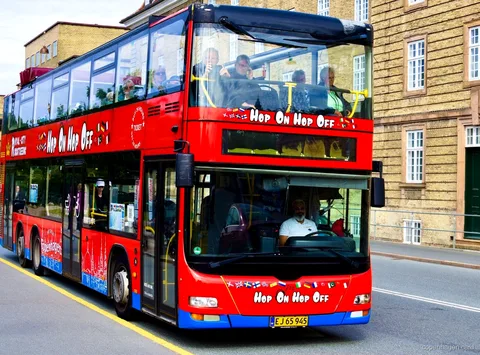
Discover includes unlimited rides on buses, trains, the metro, and harbor buses across Greater Copenhagen, plus the airport connection. That makes it the practical pick if you’re staying in the city center and plan to hop between neighborhoods on your own schedule. Hop instead gives you unlimited rides on a hop-on hop-off bus network with three color coded routes and a built in audio guide in six languages, which suits visitors who’d rather sit back and let a fixed route show them the highlights.
Both versions reach well beyond the obvious landmarks. Alongside the major museums, Hop’s attraction list includes stops like the Planetarium, SMK, the National Gallery of Denmark, Thorvaldsens Museum, the Workers Museum, and the underground ruins beneath Christiansborg Palace, so you’re not limited to a short list of tourist traps. If you’re still weighing the two, our dedicated Copenhagen Card Discover vs Hop comparison lays out the full attraction list for each.
What Does the Copenhagen Card Include?
The Copenhagen Card covers free entry to more than 80 museums, castles, and sights, based on the version you choose. It’s built to save you from paying separately at each stop, and the list runs well beyond the obvious landmarks.
Confirmed inclusions span royal history at Rosenborg Castle, the former royal residence that still displays the Danish crown jewels, and the Christiansborg Palace reception rooms. You’ll also find national culture at the National Museum and the Danish War Museum, design and architecture at the Design Museum Denmark and the Danish Architecture Centre, and Viking era exhibits at the Viking Ship Museum. Add Copenhagen Zoo, the atmospheric underground galleries at the Cisterns, a former Victorian era reservoir turned exhibition space, and a classic guided canal tour through the city’s waterways, and it’s a genuinely broad list rather than a handful of headline sights padded out with minor stops.
Tivoli Gardens is covered too, though only the garden entry, not the individual ride tickets, which you’d buy separately if you want the rollercoasters. That single caveat trips up a lot of first time visitors, so it’s worth planning for a ride pass on top if a theme park day is on your list. For the complete, categorized checklist, including which museums require advance booking, see everything included in the Copenhagen Card.
Is the Copenhagen Card Worth It?
For most short trips packed with sightseeing, yes. Add up just three or four paid attractions, and you’re often already close to the card’s price, before counting the free transport on top.
Take a realistic day: a Christiansborg Palace ticket runs around €30, Rosenborg Castle around €20, and a guided canal cruise around €21. That’s already €71 for three stops, without a single bus or metro ride included. Add public transport for the day, including a ride in from the airport that would otherwise cost a separate fare, and the math tips clearly in the card’s favor once you’re doing more than light sightseeing.
Families and small groups tend to see the strongest case, since every person in the group multiplies the savings from skipping individual tickets, and a lower child rate stretches the value further. The card makes less sense if your trip is mostly relaxed cafe time with only one or two paid sights, since you’d pay for access you won’t use. It’s also a weaker fit for a very short layover style visit, where you won’t realistically fit enough attractions into the window to break even. We break down the full break even math, including honest pros and cons, on our is the Copenhagen Card worth it page.
How Do You Buy and Activate the Copenhagen Card?
Buy the Copenhagen Card online before your trip, then activate it in the app only when you’re ready to start sightseeing. Buying ahead locks in your price and skips any airport or kiosk queue.
Once purchased, you’ll receive a code by email that you enter into the official Copenhagen Card app on your phone. The card stays dormant until you tap to activate it, which is the moment your validity window actually begins, whether that’s 24 or 120 hours. This is worth planning around: activate the card first thing on your first full day of sightseeing, not the evening you land, so you don’t burn hours while you’re settling into your hotel.
One detail catches people out: a booking confirmation on its own isn’t the card. You need the redeemed code activated inside the official app before staff at an attraction will let you in, so it’s worth doing that step with working wifi rather than trying it for the first time at a museum entrance. The same app also doubles as a basic city guide, with a map of included attractions, which is handy for planning each day on the fly.
Does the Copenhagen Card Cover Public Transport?
With the Discover version, yes. It includes free, unlimited travel on buses, trains, the metro, and harbor buses across the entire Greater Copenhagen area, including the connection to and from the airport.
That single benefit can be worth more than it sounds, since a short taxi ride from Copenhagen Airport into the city center often costs more than a full day of public transport fares. It also means you don’t have to figure out a separate zone based ticket system before you’ve even left the terminal, which is one less thing to sort out on a first visit. The Hop version works differently: instead of general public transport, it swaps in unlimited rides on its own hop-on hop-off bus network, so you’d need a separate transport ticket for the metro or train if you pick that tier.
For a deeper look at how the city’s zones, tickets, and networks work outside the card, our Copenhagen public transport guide covers the basics. If you only need transport and don’t plan to visit paid museums or attractions, it’s also worth comparing against the Copenhagen City Pass, a separate transport only product that skips attraction access entirely.
When Is the Best Time to Visit Copenhagen with the Card?
Late spring through early autumn, roughly May to September, brings the longest daylight hours and the mildest weather for walking between attractions and canal tours. That’s also the busiest season, so popular time slots at museums can fill up, and outdoor sights like the canal tour and Tivoli’s gardens feel their most crowded.
Spring shoulder months bring blooming parks and thinner crowds without the deep chill of winter, which makes April and May a strong middle ground for anyone who wants good weather without peak season lines. Visiting outside peak summer has its own upside: shorter queues at major sights and, in December, a festive Tivoli Gardens Christmas market that’s worth seeing even in the cold. Winter days are short and often damp, so pairing the card with a mostly indoor museum itinerary makes more sense than a canal heavy plan, and Copenhagen’s cozy cafe culture gives you plenty of warm places to retreat between stops.
The Copenhagen Card suits first time visitors who want to see several museums and landmarks without planning each ticket separately, and anyone staying long enough to hit three or more paid attractions in a day.
Families tend to see strong value, since kids get a lower rate and a single pass means fewer transactions to manage while herding everyone between sights, rather than buying and tracking separate child tickets at every stop. Students and solo travelers can still come out ahead, though the math depends more on how many attractions you’ll realistically visit alone versus splitting costs with a group. Couples generally follow the same standard adult pricing as any other pair of travelers, with the same break even logic: enough paid attractions in a day, and the card wins.
If your trip leans toward one long lazy beach day and a single museum, the card is harder to justify. It also makes less sense for a business trip built around meetings rather than sightseeing, where you’d only use a fraction of what the pass offers. We break down the numbers by group type in our guide to which Copenhagen Card is right for you, including a dedicated look at the Copenhagen Card for families.
Insider Tips for Getting the Most from Your Card
A few practical habits make a real difference in how much value you squeeze out of the pass. First, buy online in advance rather than at a kiosk or the airport, since it’s typically cheaper and you skip the queue entirely.
Second, remember that about half of Copenhagen’s museums and attractions close on Mondays, and some close on public holidays, so it’s worth mapping your must see list against opening days before you commit to a duration. Third, download the app and confirm it works on your phone before you land, since activation happens through it, and don’t forget you’ll need a data connection or wifi the first time you activate.
Fourth, the card allows one visit per attraction, so plan your route rather than doubling back to the same museum twice, since re-entry isn’t possible even on a longer duration pass. A few attractions also recommend booking a time slot in advance even with the card, so check ahead for anything you especially don’t want to miss. Finally, pack comfortable shoes: Copenhagen is a flat, walkable, and famously bike friendly city, and you’ll likely cover more ground on foot between transit stops than you expect, even with unlimited transport included.
What’s Worth Visiting Near Copenhagen?
Beyond the city center, a couple of half day trips reward the effort of a short train ride out. Kronborg Castle in Helsingor, a UNESCO World Heritage Site and the real setting behind Shakespeare’s Hamlet, sits about 45 minutes north by regional train. Frederiksborg Castle, a lakeside Renaissance palace now home to Denmark’s national history museum, makes another popular day trip for history focused travelers. Neither sits inside the core Copenhagen Card transport zone, so it’s worth checking your card’s specific coverage or budgeting for a train ticket before you set out.
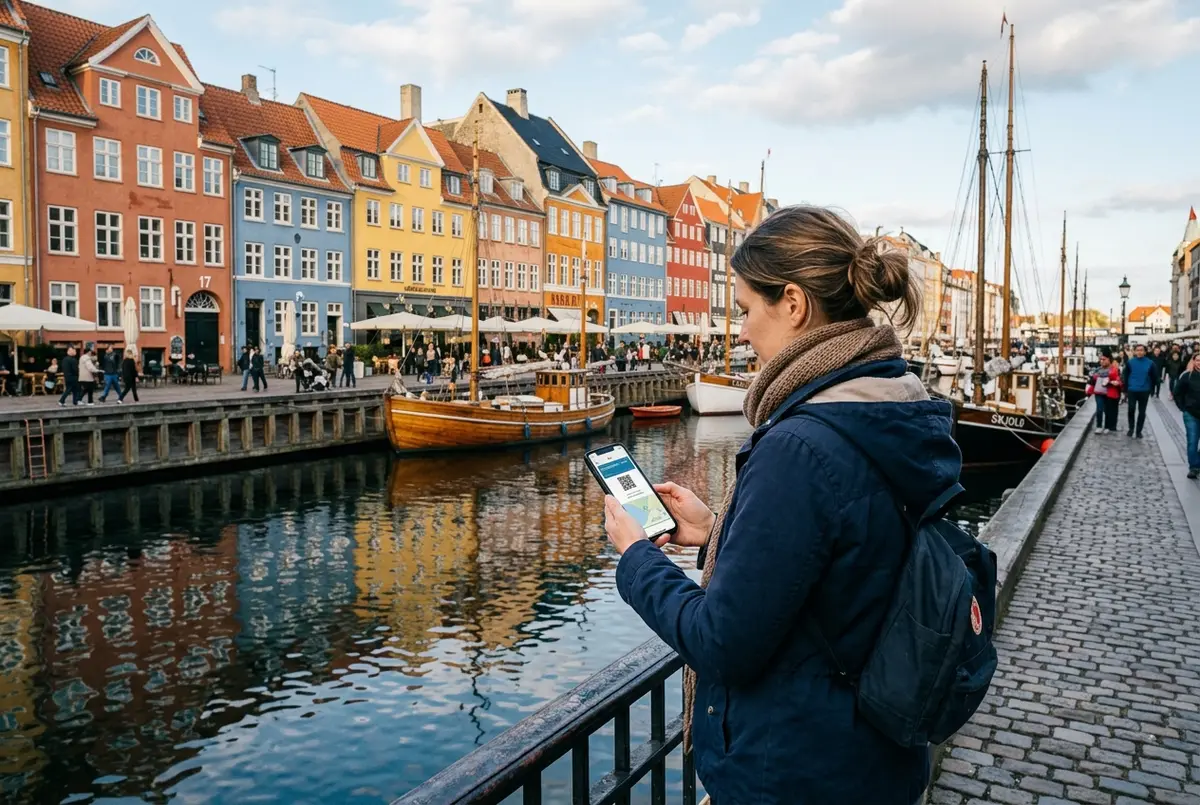
Closer to the center, don’t overlook the harbor itself. A short canal cruise from Nyhavn, included with the card, is one of the easiest ways to see the colorful waterfront houses that define the city’s skyline, without booking anything extra. It’s a relaxed way to end a day of museum hopping, and it works in almost any weather.
If you’d rather browse every available Copenhagen ticket and pass side by side, including options beyond the card itself, our full tours and tickets hub has the complete list, so you can weigh the card against standalone tickets for whatever you’re most excited to see. For general trip context and current visitor information, Visit Copenhagen’s official tourism site is a solid outside reference alongside this guide.
It's an official digital sightseeing pass covering entry to more than 80 museums and attractions across Copenhagen, plus free public transport in the Discover version. You buy it once, activate it in an app, and use it for a set number of hours, from 24 up to 120.
How much does the Copenhagen Card cost?
Prices start from around €79 for the shortest option and rise with each longer duration, up to 120 hours. The exact price depends on the tier and the number of travelers, so check the comparison table above for current rates.
What's the difference between the Copenhagen Card Discover and Hop?
Discover includes free public transport on buses, trains, and the metro across Greater Copenhagen. Hop swaps that for unlimited rides on a hop-on hop-off sightseeing bus with three routes and an audio guide. Both cover 40 or more attractions, so the choice comes down to how you'd rather get around.
Does the Copenhagen Card include Tivoli Gardens?
Yes, but only garden entry, not ride tickets. You can walk through Tivoli's grounds free with the card, then buy a separate ride pass on site if you want the rollercoasters and other rides.
Is the Copenhagen Card worth it for a short trip?
Often, yes. Combine just three or four paid attractions, like a castle, a museum, and a canal tour, and you're already close to the card's price, before counting the free transport. For a packed one or two day visit, it usually pays for itself.
Do children get a discount on the Copenhagen Card?
Yes, the Copenhagen Card offers a lower child rate, and very young children often visit free with a paying adult. Exact age cutoffs and prices vary by tier, so check the current family pricing when you book.
Can I use the Copenhagen Card to get from the airport?
With the Discover version, yes. Free public transport covers the metro and train routes between Copenhagen Airport and the city center, so you can skip a separate ticket purchase the moment you land.
How do I activate the Copenhagen Card?
Download the Copenhagen Card app, enter your eight character code, and tap to activate when you're ready to start sightseeing. The clock only starts running once you activate it, not when you buy it.
What's the difference between the Copenhagen Card and the Copenhagen City Pass?
The Copenhagen Card bundles attraction entry with transport. The Copenhagen City Pass, issued separately by the local transit authority, covers transport only, with no free museum or attraction access. Choose the City Pass only if you don't plan to visit paid sights.
Are Copenhagen's museums open every day?
Not all of them. About half of the museums and attractions covered by the Copenhagen Card close on Mondays, and some close on public holidays too. Always check an attraction's own opening hours before you plan your day around it.