
Good copenhagen travel tips save you from the two most common first time mistakes: trying to cram too much into too few days, or under budgeting because Denmark’s prices catch you off guard. This copenhagen travel guide covers the practical basics, currency, language, tipping, getting around, and a simple framework for deciding how many days you actually need, so the rest of your planning builds on solid ground.
Copenhagen Trip Planning Guide: When to Go & What to Know
Quick answer
The most useful copenhagen travel tips for a first visit are simple: budget 2 to 3 days for the highlights, expect most places to take cards over cash, and decide early whether a bundled sightseeing pass or pay as you go suits your itinerary better.
Check availability ✓ Free cancellation available · From 79 EUR
Contents
- How Many Days Do You Need in Copenhagen?
- What Language Do People Speak in Copenhagen?
- Do You Need a Visa to Visit Copenhagen?
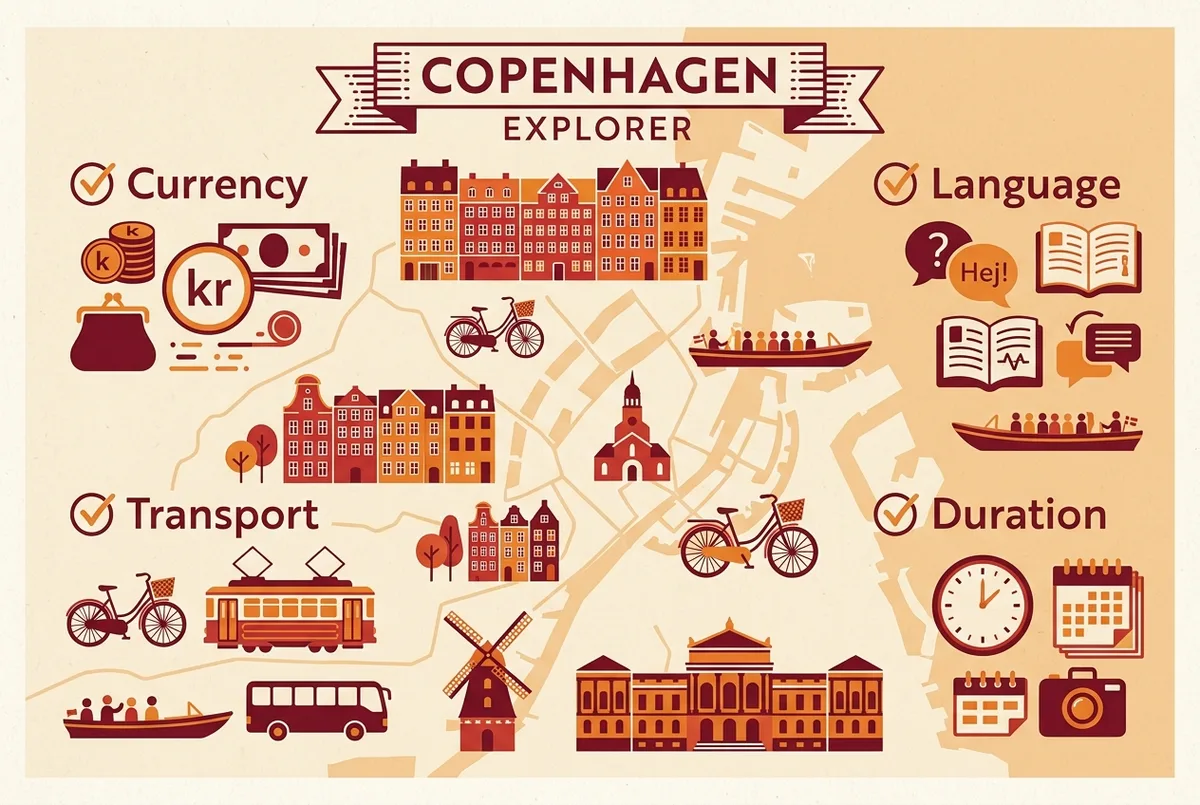
- What Currency Does Copenhagen Use?
- Do You Need to Tip in Copenhagen?
- Is Copenhagen Expensive?
- How Much Should You Budget Per Day in Copenhagen?
- Are There Good Day Trips from Copenhagen?
Ready to visit?
Book your tickets in advance: popular time slots sell out.
Check availability · From79EUR →✓ Free cancellation available · Secure booking
Everything below assumes you are visiting as a short term tourist rather than relocating, and it leads naturally into the more detailed guides on this site covering safety, neighborhoods, weather and day by day itineraries.
How Many Days Do You Need in Copenhagen?
How many days in Copenhagen depends on your pace, but 2 to 3 days covers the essential sights comfortably for most first time in Copenhagen visitors. A single day works if Copenhagen is one stop on a longer Scandinavian trip, while a full week leaves room for day trips to the Louisiana Museum of Modern Art or across the Öresund Bridge to Malmö, Sweden.
Use this rough framework: one day covers the historic core, Nyhavn, Strøget and one major museum or castle. Two days adds Christianshavn’s canals, Freetown Christiania and a proper canal tour. Three days brings in Tivoli Gardens at a relaxed pace plus a second neighborhood like Vesterbro or Nørrebro. If your travel dates are already fixed, our one day in Copenhagen itinerary lays out an hour by hour route sized to match exactly that timeframe.
Travelers combining Copenhagen with other Scandinavian cities often shortchange it to two days to leave room for Stockholm or Oslo, which works fine for the headline sights but leaves little room for a slower neighborhood visit or a day trip. If Copenhagen is the main destination rather than a stopover, four or five days lets you add a relaxed second museum day, a proper Christianshavn wander and one trip outside the city without feeling rushed anywhere.
What Language Do People Speak in Copenhagen?
Danish is the official language, but English is spoken fluently and widely across hotels, restaurants, shops and public transport, often to a near native standard among younger Danes. Menus, signage and transport announcements are commonly bilingual in tourist heavy areas, so a first time in Copenhagen visitor rarely runs into a genuine language barrier.
Learning a few basic Danish phrases, hej for hello, tak for thank you, still goes a long way as a courtesy, even though it is not strictly necessary to get by.
Do You Need a Visa to Visit Copenhagen?
It depends on your nationality. Denmark is part of the Schengen Area, so citizens of the EU and EEA can enter with just a valid national ID card or passport, and citizens of many other countries, including the United States, United Kingdom, Canada and Australia, can visit visa free for stays of up to 90 days within a 180 day period. Travelers from countries without a visa waiver agreement need to apply for a Schengen visa before departure.
Check your passport’s expiry date regardless of visa status, since Schengen entry rules typically require at least three months of remaining validity beyond your planned departure date. Rules do shift occasionally, so confirming against your own country’s current requirements a few weeks before departure is worth the five minutes it takes.
What Currency Does Copenhagen Use?
Denmark uses the Danish krone (DKK), not the euro, despite being an EU member state. The krone has been pegged to the euro since 1999 at a stable rate close to 7.46 kroner per euro, so euro prices convert predictably if you are budgeting in advance. Most attractions, tours and sightseeing passes aimed at international visitors, including the Copenhagen Card, bill directly in euros, which simplifies comparison shopping before you travel.
Card payments are accepted almost everywhere, including small cafes and public transport, and many Danish businesses actively prefer cards over cash. Carrying a small amount of kroner for the rare cash only stall is sensible, but you will not need to change large sums before arriving.
Contactless tap to pay and mobile wallets work at the vast majority of card terminals across the city, including on buses and at metro fare gates, so a physical wallet full of cash is genuinely unnecessary for most trips. Some smaller family run shops and market stalls still favor cash, so keeping a modest amount of kroner on hand avoids any awkward moments at the till.
Do You Need to Tip in Copenhagen?
No, not in the way tipping works in the United States. Service charges are already built into menu prices and wages in Denmark, so tipping is not expected or required at restaurants, bars or taxis. Rounding up the bill or leaving 5 to 10 percent for genuinely exceptional service is a nice gesture, appreciated but never assumed.
Skipping a tip does not mark you as rude in Copenhagen the way it might elsewhere, which is one small but real budgeting relief on an otherwise pricey trip.
Is Copenhagen Expensive?
Yes, by most international standards. Copenhagen regularly ranks among Europe’s pricier capital cities for food, drinks and accommodation, closer to Zurich or Oslo than to Southern European destinations. A casual restaurant meal, a mid range hotel night and a round of drinks all tend to cost noticeably more here than in most of continental Europe.
Attraction entry fees add up quickly too. A single museum or castle visit often runs €15 to €25 on its own, and stacking two or three paid stops into one day can approach or exceed the price of a bundled sightseeing pass for that same day. This is exactly the calculation our Copenhagen Card price guide runs in full detail, comparing the card against paying for attractions and transport separately.
How Much Should You Budget Per Day in Copenhagen?
A realistic daily budget for a mid range trip runs somewhere between €150 and €250 per person, covering a shared mid range hotel room, three meals, a paid attraction or two and local transport. Travelers staying in hostels and eating simply can trim that closer to €80 to €120 a day, while a higher end trip with fine dining and boutique hotels easily climbs past €300 per day.
Food and drink are usually the biggest daily swing factor. A casual lunch runs €12 to €18, a sit down dinner with a drink often lands between €25 and €40 per person, and coffee culture is strong enough that a couple of cafe stops a day add up faster than most visitors expect. Locking in accommodation and any sightseeing pass ahead of time removes two of the three biggest cost variables, leaving food as the main number to track once you land.
Are There Good Day Trips from Copenhagen?
Yes, several worthwhile options sit within an hour or two of the city by train. Malmö, Sweden, is a 35 minute train ride across the Öresund Bridge and makes an easy half day or full day trip without needing a rental car. The Louisiana Museum of Modern Art, roughly 40 minutes north by train along the coast, pairs striking modern architecture with a genuinely excellent contemporary art collection. Roskilde, home to a UNESCO listed cathedral and the Viking Ship Museum, is another popular half day trip about 25 minutes from central Copenhagen.
Any of these work well as a add on if your trip runs four days or longer, though first time visitors on a tight 2 to 3 day schedule usually get more value staying focused on the city center itself.
How Do You Get Around Copenhagen?
Copenhagen is one of the most walkable and bike friendly capitals in the world, with a compact city center where most major sights sit within comfortable walking distance of each other. For longer hops, the driverless metro, buses and S-trains run on a single zone based fare network that covers the whole Capital Region, including the airport.
Renting a bike is a genuinely popular way to get around, thanks to dedicated cycle lanes across most of the city, though it takes a little getting used to for visitors unfamiliar with cycling in traffic. Our Copenhagen public transport tickets guide breaks down every ticket type, from single fares to time based passes, for visitors who would rather stick to trains, buses and the metro.
The metro connects directly to Copenhagen Airport, with a ride into the city center taking around 15 minutes, making it easy to skip taxis entirely on arrival and departure. Trains and metro lines run frequently through the day and into the evening, with a reduced but still functional night schedule on weekends, so late arrivals rarely need to plan around limited transport options.
What’s the Best Way to See Everything Without Overpaying?
For most itineraries packing in two or more paid attractions a day, a bundled sightseeing pass beats paying for each ticket and transport fare separately. The Copenhagen Card is the main option on the market, covering dozens of museums and landmarks plus public transport in a single upfront price, so you are not doing mental math at every ticket counter.
Slower trips built around one museum and a lot of walking get less value from any bundled pass, since the math only works in your favor once your planned spending crosses the card price. Running your own numbers before committing either way is worth the ten minutes it takes.
When Should You Visit Copenhagen?
When to visit Copenhagen depends heavily on how much you value long daylight and mild weather against smaller crowds and lower prices. Summer (June through August) brings the warmest temperatures and the longest days, ideal for outdoor canal life and Tivoli Gardens in full bloom, but also the biggest tourist crowds. Our best time to visit Copenhagen guide breaks down every season month by month, including the shoulder season windows that balance decent weather against thinner crowds.
Where Should You Stay in Copenhagen?
Indre By, the historic city center, puts you within walking distance of Nyhavn, Strøget and most headline sights, at a price premium. Vesterbro, Nørrebro and Christianshavn all offer a more local feel, generally lower rates and still solid transport links into the center. Our where to stay in Copenhagen guide compares all four areas by walkability, price and vibe so you can match a neighborhood to your own travel style.
Is Copenhagen Safe for Tourists?
Yes, Copenhagen is consistently ranked among the safest capital cities in the world, with low violent crime and a strong culture of public trust. The genuine risks for visitors are smaller and more practical, mainly bike lane etiquette and petty theft in crowded tourist spots, both covered in full in our is Copenhagen safe guide.
That same sense of order extends to solo travelers and families alike, and it is a big part of why so many first time visitors describe Copenhagen as an easy city to relax into rather than one that demands constant vigilance.
What Should First Time Visitors Not Miss?
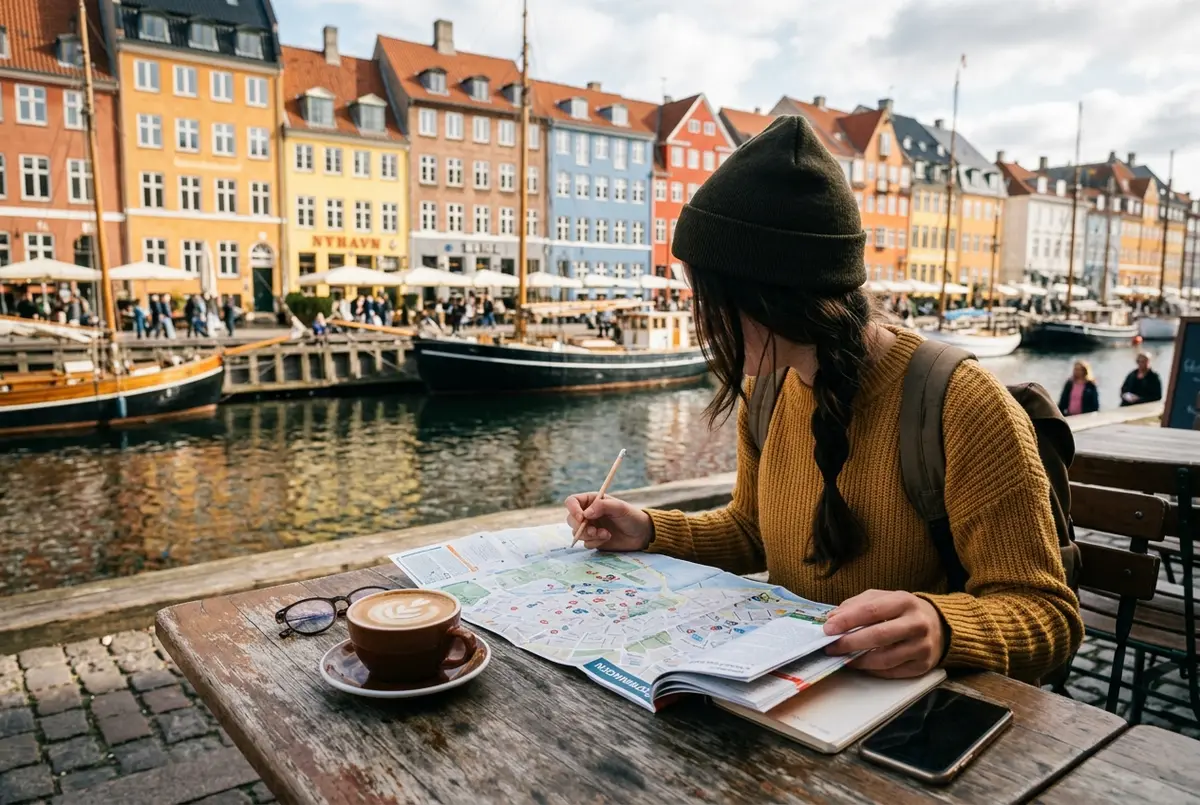
Nyhavn’s colorful harbor houses, a canal tour departing from that same harbor, Tivoli Gardens, and at least one flagship museum or castle, Rosenborg Castle and the Carlsberg Experience are two of the strongest options, round out a realistic first time itinerary. Our one day in Copenhagen itinerary sequences these stops into a single well paced route if your visit is tight on time.
Do You Need Advance Reservations for Anything?
Booking your sightseeing pass, key museum tickets and any popular canal tour a few days ahead is a sensible habit, especially across the busy June through August window, since same day availability tightens up during peak season. Restaurants at the higher end also fill up fast on weekend evenings, so reserve ahead if a specific spot is a priority rather than a backup option.
What Are Copenhagen’s Opening Hours Like?
Most shops open around 10am and close by 6pm on weekdays, with shorter Saturday hours and many smaller shops closed entirely on Sundays, though supermarkets and tourist area shops tend to stay open later and across the weekend. Museums typically run 10am to 5pm, and a number close entirely on Mondays, so it is worth checking a specific attraction’s schedule before building it into a tight itinerary.
Restaurants generally serve dinner from around 6pm, later than some visitors expect coming from countries with an earlier dining culture, and bars and nightlife areas stay lively well past midnight on weekends.
What Should You Pack for Copenhagen?
Layers matter more than any single item, since Copenhagen’s weather can shift within a single day regardless of season. A light rain jacket earns its space in any Copenhagen packing list year round, and comfortable walking shoes matter more here than almost anywhere else, given how much of a typical visit happens on foot or by bike.
A reusable water bottle is worth packing too, since tap water is safe to drink throughout the city and refilling beats buying bottled water at tourist prices near major attractions. If cycling is part of your plan, a small bike lock and a phone mount help, though most rental services provide their own lock as part of the rental.
Copenhagen’s mix of grand royal architecture, a genuinely walkable scale and a food and design culture that punches well above the city’s size is what keeps first time visitors coming back with a longer list next time. According to Wikipedia, Copenhagen is Denmark’s capital and largest city, with a metropolitan population of around 1.4 million, which helps explain why a well planned few days barely scratches the surface.
Frequently Asked Questions
Is 3 days enough in Copenhagen? Yes, 3 days comfortably covers the historic core, a canal tour, Tivoli Gardens and one or two major museums at a relaxed pace, without feeling rushed between stops.
What is the number one copenhagen travel tip for first time visitors? Decide early whether a bundled sightseeing pass fits your itinerary, since Copenhagen’s attraction prices add up fast and that single decision shapes how you budget the rest of the trip.
Do I need cash in Copenhagen? Rarely. Cards are accepted almost everywhere, including public transport and small cafes, so carrying only a small amount of Danish kroner is enough for the odd cash only exception.
Is English enough to get by in Copenhagen? Yes, English is spoken fluently and widely across hotels, restaurants and transport, and most signage in tourist areas is bilingual, so a genuine language barrier is rare.
What is the biggest budgeting mistake first time visitors make in Copenhagen? Underestimating how quickly attraction entry fees add up. Stacking two or three paid museums or landmarks into a single day often costs more than expected, which is exactly why comparing that total against a bundled Copenhagen Card is worth doing before you book anything.